
Emma Brown
Featured
Commercial Plumbing Services vs. Residential Plumbing: What's the Difference?
Plumbers
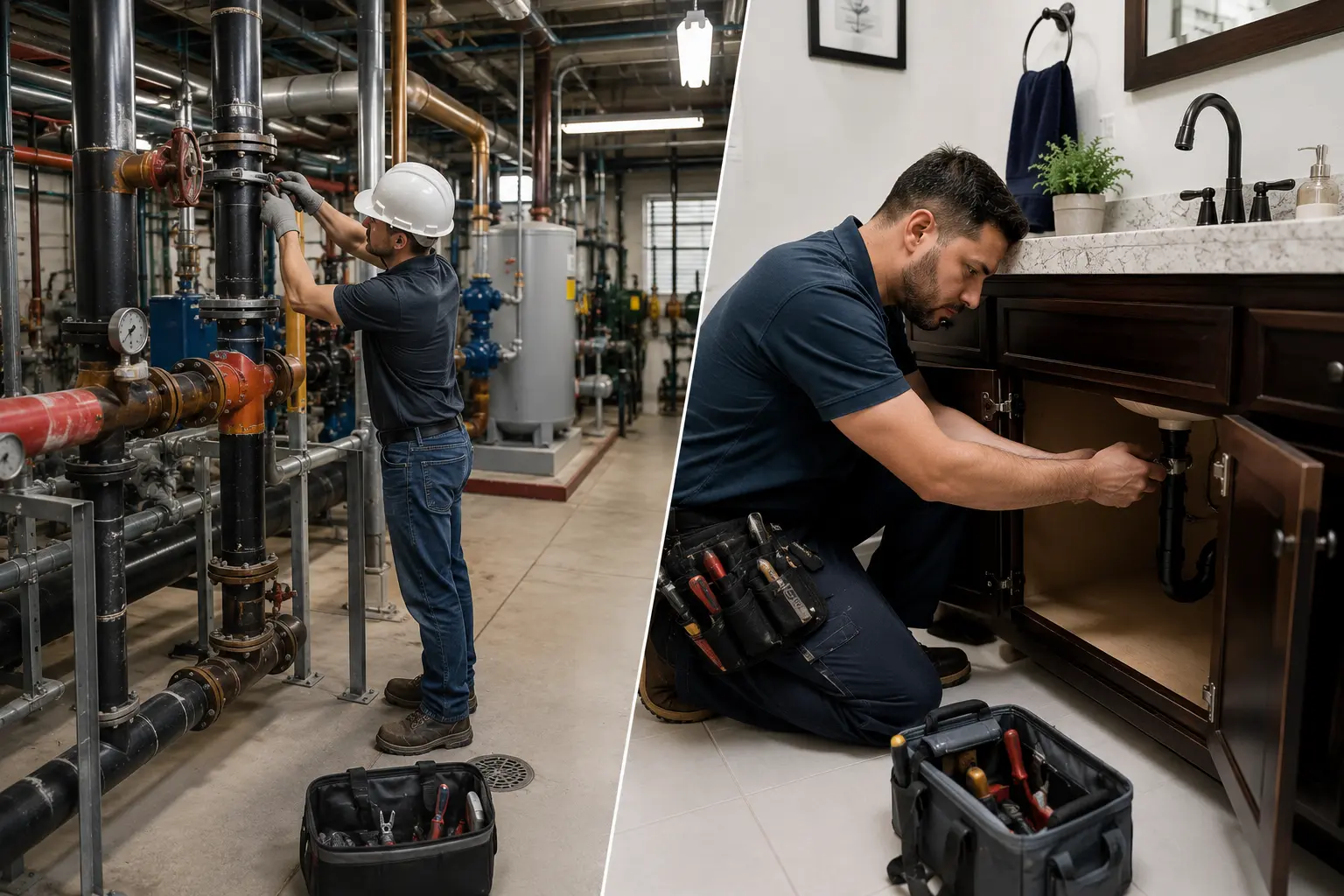
Plumbing systems are essential for maintaining safe and functional water supply and drainage, but the needs of commercial and residential properties are quite different. Residential plumbing is designed for homes and smaller buildings, handling everyday requirements such as bathrooms, kitchens, water heaters, and household fixtures. Commercial plumbing, on the other hand, supports larger properties with higher water usage and more complex systems.
Commercial plumbing services involve specialized equipment, advanced installation methods, and compliance with industry regulations. These systems are commonly found in offices, hospitals, schools, restaurants, and industrial facilities, where plumbing issues can affect daily operations.
Understanding the differences between commercial and residential plumbing helps property owners identify the right solutions, schedule proper maintenance, and ensure their plumbing systems operate efficiently and reliably.
Keep your commercial plumbing system operating at its best with @United Plumbing. From routine maintenance to emergency repairs, their experienced team delivers reliable plumbing services for businesses across Orange County. Call (714) 333-6188 today to get started.
What Is Residential Plumbing?
Residential plumbing refers to the pipes, fixtures, and systems that supply water and remove waste in homes, apartments, and other private living spaces. It's built around the needs of a single household, meaning the systems are smaller in scale and generally easier to install, maintain, and repair.
Common Components of Residential Plumbing
A typical residential system includes water supply lines, drainage pipes, water heaters, and fixtures like sinks, toilets, showers, and washing machines. Most homes rely on standard-sized pipes and materials such as PVC or copper, since the demand placed on the system is limited to a single family or a small number of occupants.
Scope and Scale of Residential Systems
Because homes have fewer people using the plumbing at any given time, residential systems are designed with lower flow rates and simpler layouts. Issues like clogged drains, leaky faucets, running toilets, and water heater malfunctions are the most common problems a residential plumber will encounter, and most repairs can be completed in a single visit.
Regulations for Residential Plumbing
Residential plumbing still follows local and state building codes, but the requirements are generally less stringent than those for commercial properties. Permits are usually simpler to obtain, and inspections tend to focus on basic safety standards rather than the complex compliance rules that apply to public and commercial spaces.
Are you a commercial plumbing contractor serving California?
Connect with businesses searching for trusted commercial plumbing services in their area. Register your business with Yellow Pages California to increase your visibility, generate qualified leads, and grow your customer base. Click here to register today.
What Are Commercial Plumbing Services?
Commercial plumbing services cover the design, installation, repair, and maintenance of plumbing systems in business environments such as offices, restaurants, hospitals, schools, hotels, and industrial facilities. These systems are built to handle significantly higher water usage and a much larger number of daily users than a typical home.
Components of Commercial Plumbing Systems
Commercial systems often include larger diameter pipes, multiple water heaters or boiler systems, grease traps, backflow prevention devices, and complex drainage networks that may span multiple floors. Because these buildings serve hundreds or even thousands of people daily, the equipment used is built for durability and higher performance.
Scale and Complexity of Commercial Plumbing
Commercial properties frequently have multiple bathrooms, kitchens, and water lines running through several floors or wings of a building. This complexity means commercial plumbing services require careful planning, often involving blueprints, load calculations, and coordination with other building systems like HVAC and fire suppression.
Regulatory Compliance in Commercial Plumbing
Commercial plumbing is subject to stricter codes and health regulations, particularly in industries like food service and healthcare. A commercial plumber must stay current with local plumbing codes, ADA accessibility requirements, and industry-specific health standards to keep a business compliant and operational.
Key Differences Between Commercial and Residential Plumbing
While both types of plumbing serve the same basic purpose, moving water in and waste out, the way they're designed, installed, and maintained differs significantly. Understanding these differences helps property owners set realistic expectations for cost, timelines, and the expertise required.
Size and Complexity of the System
Residential plumbing typically serves one household, while commercial systems are engineered to support hundreds of daily users across multiple floors or units. This means commercial plumbing involves larger pipe networks, more fixtures, and greater redundancy to prevent total system failure if one part breaks down.
Materials and Equipment Used
Commercial plumbing generally uses heavier-duty materials, such as cast iron or reinforced piping, along with commercial-grade fixtures designed to withstand constant use. Residential plumbing tends to use lighter materials like PVC or PEX, which are sufficient for the lower demand of a household.
Water Usage and Demand
A commercial building's plumbing system must handle far greater water volume than a home, especially during peak hours when many people are using restrooms, kitchens, or equipment simultaneously. This higher demand requires larger water heaters, bigger pipes, and more powerful pumps to maintain consistent pressure throughout the building.
Accessibility and Building Layout
Commercial buildings often have multiple stories, requiring plumbers to account for gravity, water pressure changes, and long horizontal pipe runs. Residential homes are usually simpler in layout, making access to pipes and fixtures more straightforward for repairs and inspections.
Response Time and Working Hours
Residential plumbing issues are usually addressed during standard business hours unless it's an emergency, while commercial plumbing problems often need immediate attention regardless of the time of day. A clogged drain in an office building or restaurant can disrupt operations and revenue, so many businesses schedule plumbing maintenance services during off-hours or overnight to avoid interfering with daily activities.
Cost Considerations
Because of the scale, materials, and specialized labor involved, commercial plumbing services typically cost more than residential plumbing repairs. Businesses often invest in maintenance contracts to spread out costs and catch potential issues before they become expensive emergencies.
Common Services Offered by Commercial and Residential Plumbers
Both residential and commercial plumbers offer a range of services, but the focus and frequency of each service can vary depending on the property type. Knowing what each professional typically handles makes it easier to find the right fit for a specific plumbing need.
Residential Plumbing Services
Residential plumbing services usually include drain cleaning, toilet and faucet repair, water heater installation and repair, pipe leak detection, and fixture replacement. A residential plumber may also handle bathroom or kitchen remodels, sewer line inspections, and general plumbing maintenance to keep a home's system running smoothly.
Commercial Plumbing Services
Commercial plumbing services often involve larger-scale projects such as installing multiple restrooms, setting up grease trap systems for restaurants, backflow prevention testing, and maintaining boiler or water heating systems for entire buildings. A commercial plumber may also work on new construction projects, retrofitting older buildings, and managing plumbing systems across multiple floors or units.
Plumbing Repair Services for Emergencies
Both residential and commercial properties can experience plumbing emergencies like burst pipes, major leaks, or sewer backups. Plumbing repair services for emergencies are structured differently depending on the property, since a business may require a rapid response team to minimize downtime, while a homeowner typically needs prompt but less time-sensitive support.
Preventive Maintenance and Inspections
Routine plumbing maintenance services are valuable for both property types, helping catch small issues before they become costly repairs. Commercial properties often rely on scheduled maintenance contracts, while residential maintenance is usually performed on an as-needed basis or through periodic inspections.
Why Commercial Plumbing Requires Specialized Expertise
Commercial plumbing systems are more complex and carry higher stakes than residential plumbing, which is why they demand a different level of training and experience. A plumbing failure in a business setting can affect employees, customers, and daily operations, making specialized knowledge essential.
Advanced Technical Training
A commercial plumber typically undergoes additional training to work with large-scale systems, high-pressure pipelines, and specialized equipment like commercial water heaters and backflow preventers. This technical background allows them to diagnose and resolve problems in complex systems that a residential plumber may not typically encounter.
Knowledge of Codes and Industry Regulations
Commercial properties must comply with a broader set of plumbing codes, health regulations, and safety standards, especially in industries like healthcare, food service, and manufacturing. Professional plumbing services for businesses require an in-depth understanding of these regulations to avoid violations, fines, or shutdowns.
Project Management for Large-Scale Systems
Commercial plumbing projects often involve coordinating with architects, contractors, and building managers, particularly during new construction or major renovations. This level of project management requires strong communication skills and the ability to interpret blueprints and technical plans, which goes beyond the scope of most residential plumbing jobs.
Minimizing Business Downtime
Because plumbing issues can directly impact a company's operations and revenue, commercial plumbers are trained to work efficiently and often outside of normal business hours. This focus on minimizing disruption is a key reason businesses rely on experienced commercial plumbing services rather than general residential plumbers for their facility needs.
How to Choose the Right Plumbing Service for Your Needs
Choosing between a residential plumber and a commercial plumber depends on the type of property, the scale of the plumbing system, and the specific issue at hand. Taking a few factors into account can help property owners find a qualified professional for the job.
Assess the Scope of the Project
Small household repairs like a leaky faucet or clogged drain are well within the expertise of a residential plumber, while larger projects involving multiple fixtures or building-wide systems call for a commercial plumber. Matching the scope of the project to the right level of expertise helps avoid delays and unnecessary costs.
Check Licensing and Experience
Both residential and commercial plumbers should hold the proper licensing required in their state, but it's worth confirming that a commercial plumber has specific experience with business or industrial properties. Reviewing past projects or asking for references can help verify their familiarity with the type of system involved.
Consider Availability and Response Time
For businesses, availability for emergency plumbing repair services is a major factor, since downtime can directly affect operations and revenue. Homeowners may have more flexibility, but should still choose a provider known for reliable and prompt residential plumbing services.
Look for Maintenance and Long-Term Support
Ongoing plumbing maintenance services can help prevent costly emergencies for both residential and commercial properties. Choosing a provider who offers maintenance plans, inspections, and long-term support ensures the plumbing system stays reliable well beyond the initial repair or installation.
Compare Quotes and Service Guarantees
Getting quotes from a few different providers offering professional plumbing services allows property owners to compare pricing, warranties, and the scope of work included. A reputable plumber, whether residential or commercial, should be transparent about costs and stand behind their work with some form of service guarantee.
Conclusion
Commercial and residential plumbing may share the same basic goal, but the systems, equipment, and expertise required to maintain them are quite different. Homes rely on simpler layouts designed for everyday household needs, while businesses depend on larger, more complex systems built to handle higher demand and stricter regulations.
Recognizing these differences makes it easier for property owners to choose the right professional for the job, whether that means routine maintenance for a home or a specialized team managing a multi-floor commercial facility. Investing in the right plumbing support, backed by proper licensing, experience, and a focus on long-term reliability, helps keep both residential and commercial properties running smoothly for years to come.
FAQs About Commercial and Residential Plumbing
How much does commercial plumbing cost compared to residential plumbing?
Commercial jobs generally cost more due to the larger scope, heavier-duty materials, and specialized labor involved. Pricing varies widely based on the size of the building, the complexity of the system, and whether the work involves new installation or repair.
Can a residential plumber work on commercial properties?
Some plumbers are licensed and trained to handle both types of work, but commercial jobs typically require additional certifications and experience with larger systems and stricter codes. It's best to confirm a plumber's background before hiring them for a business property.
How often should commercial plumbing systems be inspected?
Most experts recommend inspecting commercial systems at least once or twice a year, though high-traffic properties like restaurants or hospitals may need more frequent checks. Regular inspections help catch small issues before they turn into major, costly disruptions.
What causes most plumbing emergencies in businesses?
Clogged drains, backed-up sewer lines, and aging or overworked water heaters are among the most common causes of plumbing emergencies in commercial buildings. High daily usage and heavier demand on the system make businesses more prone to sudden failures than typical homes.
Is it more cost-effective to repair or replace an aging plumbing system?
This depends on the age of the system, the frequency of repairs, and the overall condition of the pipes and fixtures. A qualified plumber can assess the system and provide guidance on whether ongoing repairs or a full replacement offers better long-term value.
Suggestions
Emily Johnson
Olivia Claymore
Olivia Claymore
Olivia Claymore