
Emma Brown
Driving School vs. Learning with Family: Which Is Better in California?
Driving Schools
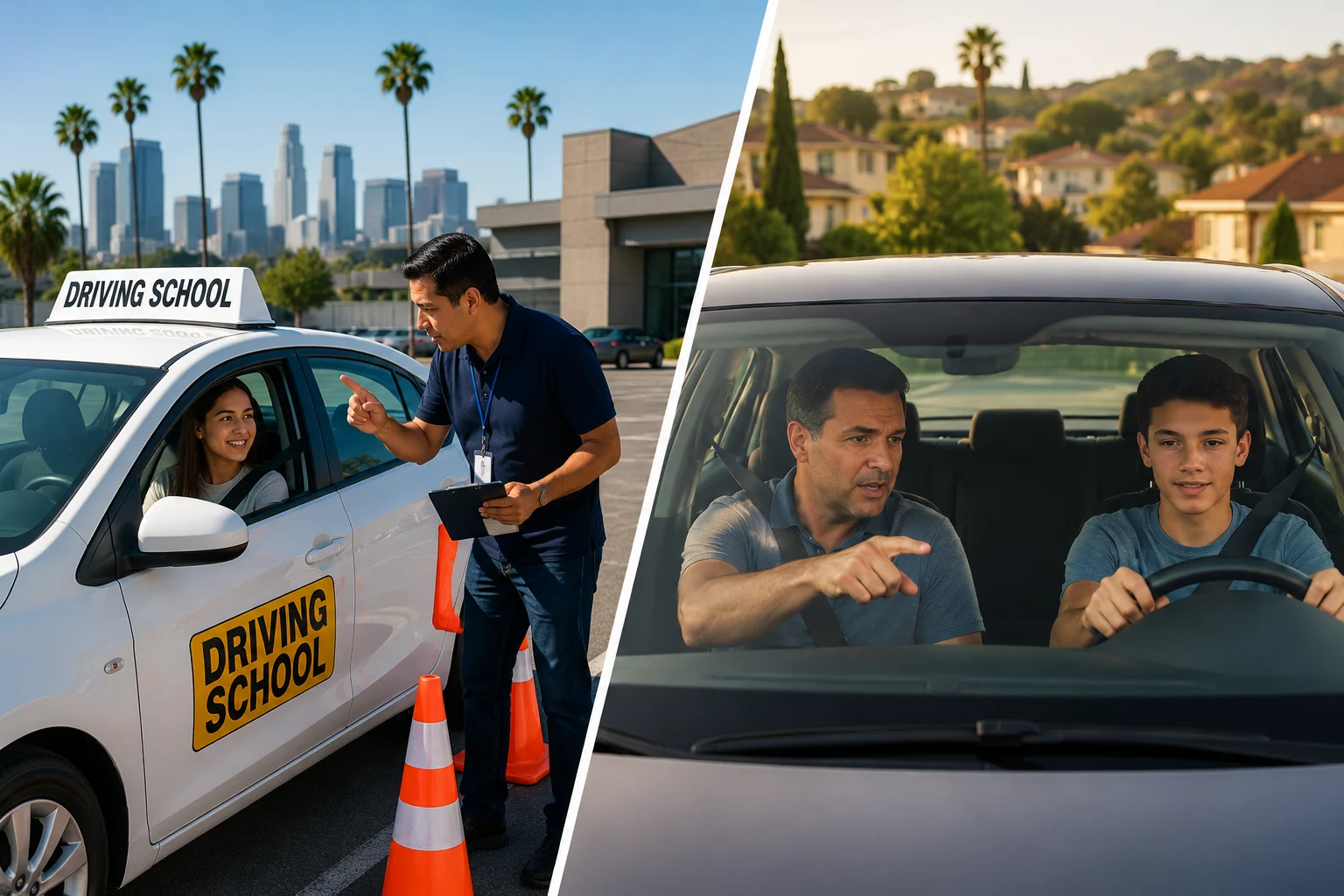
Learning to drive in California requires proper knowledge, practice, and confidence to become a safe and responsible driver. Many new learners face the decision of choosing between professional driving schools and lessons from family members. While both methods can help develop driving skills, they offer different learning experiences.
Learning with family provides flexibility, familiar guidance, and additional practice time. However, driving schools offer structured training, certified instructors, and a curriculum designed to teach traffic laws, defensive driving techniques, and safe road habits.
Understanding the advantages and limitations of each option can help learners make an informed choice. This guide compares driving schools and family-based training to determine which approach best prepares California drivers for the road.
Driving School vs. Learning with Family: Understanding Both Options
Choosing how to learn to drive is one of the first major decisions a new driver makes, and it shapes how confident and prepared they feel behind the wheel. Both structured lessons and family-led practice have their place, but they serve different purposes in a learner's overall training.
What a Driving School Offers
A driving school in California provides certified instruction, a set curriculum, and access to a dual-control vehicle. Instructors are trained to teach defensive driving, hazard awareness, and proper technique from day one, giving new drivers a consistent foundation to build on.
What Family-Based Learning Offers
Practicing with a parent or relative allows learners to log extra hours behind the wheel at no additional cost. It works best as a supplement to formal instruction rather than a complete replacement, since family members typically lack professional training in teaching driving skills.
Why the Comparison Matters
New drivers and their parents often want to know which method leads to safer driving habits and better test outcomes. Comparing both approaches side by side helps families decide how to structure a learner's practice time before they take California driving lessons or attempt the DMV test.
Grow your driving school with more local exposure.
Stand out from the competition and get found by new drivers searching for trusted instructors near them. Register with Yellow Pages California to increase visibility and generate more inquiries for your driving school. Click here to register.
Benefits of Learning Through a Professional Driving School
Enrolling in a driving school in California gives learners access to trained instructors, a dual-control vehicle, and a curriculum built around DMV testing standards. This structured approach often results in fewer bad habits and greater confidence on the road.
Certified and Experienced Instructors
Professional instructors are licensed by the DMV and know exactly what examiners look for during the behind-the-wheel test. They can correct mistakes immediately and explain the reasoning behind proper technique, rather than relying on trial and error.
Structured Curriculum and Progression
Driving schools follow a lesson plan that builds skills progressively, starting with basic vehicle control and moving toward complex maneuvers like freeway merging, parallel parking, and night driving. This step-by-step approach reduces the chances of learners feeling overwhelmed.
Dual-Control Vehicles for Safety
Most schools offering California driving lessons use vehicles equipped with a secondary brake pedal for the instructor. This added safety layer allows new drivers to practice in real traffic conditions while minimizing risk.
Exposure to Real Traffic Scenarios
Instructors intentionally expose students to varied conditions, such as highway driving, busy intersections, and different weather situations, so learners aren't caught off guard during the actual test or after they're licensed.
Preparation for the DMV Drive Test
Because instructors are familiar with local DMV testing routes and requirements, students often feel more prepared and less anxious walking into their test appointment.
Advantages and Challenges of Learning to Drive with Family
Learning with a parent or guardian offers flexibility and low cost, making it an appealing option for many households. However, it also comes with challenges that can affect how well a new driver develops safe habits.
Flexibility and Comfort
Family members can schedule practice sessions around the learner's availability without the constraints of booking appointments. Learners may also feel more relaxed practicing with someone they trust.
Cost Savings
Practicing with family reduces the number of paid lessons needed, which can make the overall process more affordable driving school California experience when combined with a smaller number of professional lessons.
Lack of Structured Teaching Methods
Most parents haven't been trained to teach driving and may pass down habits, good or bad, without a formal curriculum. This can leave gaps in a learner's understanding of defensive driving or proper technique.
Emotional Tension During Lessons
Learning with a parent can sometimes lead to frustration on both sides, especially during high-pressure situations like highway merging or parallel parking, which can affect the learner's confidence.
Limited Exposure to Testing Standards
Family members typically don't know the specific maneuvers and criteria DMV examiners evaluate, which can leave learners underprepared for the actual test format.
Driving School vs. Family Practice: Key Differences in Training and Safety
While both methods aim to produce a capable driver, they differ significantly in structure, safety measures, and the type of feedback learners receive. Understanding these differences helps families decide how to balance the two approaches.
Instruction Quality and Consistency
Driving schools provide consistent, professional feedback based on established teaching standards, while family instruction varies widely depending on the relative's own driving habits and patience level.
Safety Equipment and Risk Management
Dual-control vehicles used by professional instructors add a layer of protection that a family member's personal car typically doesn't have, which matters most during early lessons when reaction time is critical.
Test Readiness
Because driving lessons from certified schools often include mock tests and route familiarization, students tend to arrive at their DMV appointment better prepared than those who only practiced with family.
Cost Considerations
Family practice is essentially free beyond fuel and insurance, while professional lessons carry a cost per session. Many learners combine both, using a few lessons from the best driving school in California alongside supervised family practice.
California DMV Requirements and Driving Test Preparation
California has specific requirements for learners before they can apply for a driver's license, and understanding these rules helps families plan an effective training timeline regardless of which method they choose.
Permit and Age Requirements
Learners under 18 must complete driver's education and hold an instruction permit for a required period before scheduling their behind-the-wheel test, while adult learners follow a separate, simplified process.
Required Supervised Practice Hours
The DMV requires a minimum number of supervised driving hours, which can be completed through a combination of professional instruction and supervised family practice, giving learners flexibility in how they fulfill this requirement.
Behind-the-Wheel Test Expectations
The DMV drive test evaluates specific skills, including lane changes, stops, turns, and parking maneuvers. Learners who search for driving school near me ahead of their test often do so to get last-minute practice on these exact skills.
Preparing for Test Day
Whether trained by a professional or a family member, learners benefit from practicing in the type of vehicle they'll use for the test and reviewing the DMV's evaluation checklist beforehand.
Which Option Is Better for New Drivers in California?
There isn't a single right answer, as the best approach often depends on the learner's personality, budget, and how quickly they need to become road-ready. For many families, a combination of both methods offers the most balanced path to licensure.
When a Driving School Is the Better Choice
Nervous or first-time drivers, teens preparing for their first license, and anyone wanting professional feedback before their DMV test tend to benefit most from enrolling in a driving school in California.
When Family Practice Works Well
Learners who already have some experience, want extra practice hours between lessons, or need a low-cost way to build confidence often find family practice to be a useful supplement rather than a replacement.
The Case for a Combined Approach
Many learners get the best results by starting with a driving school in California to build core skills, then reinforcing those lessons through supervised family practice, giving them both professional guidance and extra time behind the wheel.
Conclusion
Both driving schools and family-based practice offer real value, but they serve different roles in a learner's journey. Professional instruction provides structure, safety, and test-specific preparation, while family practice adds flexibility and extra seat time at a lower cost. For most new drivers in California, combining a few sessions with a qualified instructor alongside supervised family practice offers the most well-rounded preparation for both the DMV test and real-world driving.
FAQs
How many driving lessons do I need before taking the DMV test in California?
Most new drivers benefit from 6-10 professional lessons, though this varies based on prior experience and comfort level behind the wheel.
Can I skip driving school and only learn from my parents in California?
Adults 18 and older can legally learn entirely through supervised family practice, but teens must complete a state-approved driver's education course first.
What is the minimum age to start driving lessons in California?
Learners can apply for an instruction permit at 15½ years old, though some driving schools accept younger students for early preparation.
Is it cheaper to learn driving with family or through a driving school?
Family practice is generally cheaper since it avoids per-lesson fees, but combining it with a few professional lessons often gives better long-term value.
How many supervised hours does California require before the driving test?
Teen drivers need a set number of supervised practice hours, which can be completed through a mix of professional lessons and family-supervised driving.
Do driving schools guarantee passing the DMV test?
No school can guarantee a pass, but professional instruction significantly improves a learner's chances by focusing on exactly what examiners evaluate.
Suggestions